
Choosing the China Best Solar Pathway Lights Manufacturer requires more than comparing prices and product photos. A reliable supplier must understand outdoor lighting, solar charging, battery storage, and changing weather conditions. This article examines manufacturers through practical evidence, not polished claims alone.
James R. Benya, a respected lighting designer and author, offers a useful principle: “Good lighting is not about more light; it is about better light.” That idea fits Solar Pathway Lights perfectly. A quality pathway light should create a clear, comfortable route without producing harsh glare. It should also survive rain, dust, winter temperatures, and repeated nightly charging.
Look closely at the details. Does the manufacturer publish lumen output, battery capacity, panel type, and waterproof rating? Can the light operate after several cloudy days? Are replacement batteries and spare parts available? These questions matter more than a bright sample image taken in a studio.
Experience reveals small weaknesses. Some lights look impressive during the first week, then dim before midnight. Others use fragile stakes that loosen in soft soil. A dependable China manufacturer should provide test reports, stable components, consistent production, and responsive technical support. Certifications are helpful, but they do not replace real-world testing.
The best supplier may not be the cheapest. It may be the one that explains limitations honestly. This guide compares design quality, customization, manufacturing capability, quality control, and after-sales service. It also considers a point buyers sometimes overlook: beautiful lighting can still fail when the installation site is poorly planned. Expect useful answers, but keep questioning them.
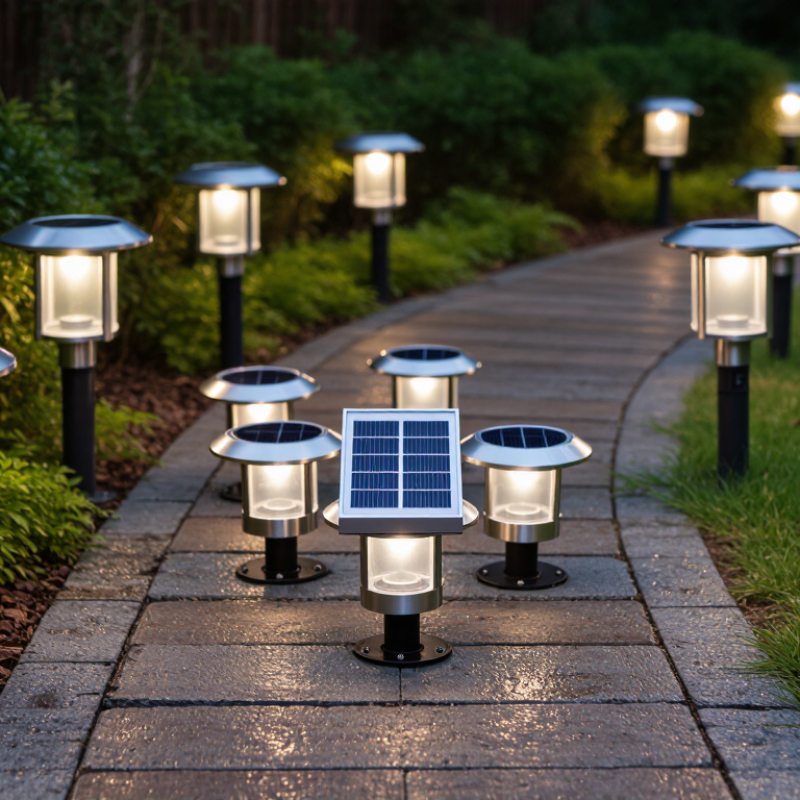
A leading manufacturer begins with measured performance, not attractive product images. The IEA PVPS Trends 2024 report recorded about 456 GW of new solar capacity worldwide in 2023. This growth increases demand for dependable outdoor lighting components. However, a pathway light still needs correct photovoltaic sizing, efficient LEDs, and stable battery management.
Experienced manufacturers test complete fixtures, not only individual parts. Ask for photometric files, battery cycle results, waterproofing evidence, and temperature testing. An IP65 rating can protect against dust and water jets, but it does not prove long service life. That distinction matters. In coastal gardens, salt exposure can damage screws, connectors, and aluminum coatings. A serious factory should explain its material choices and quality controls clearly.
Reliability also depends on field feedback. The World Bank’s Lighting Global program stresses product quality, consumer safety, and verified performance in off-grid lighting. Manufacturers should therefore track failure rates, replacement parts, and warranty claims after shipment. Batch traceability helps identify weak cells or inconsistent charging boards. Factory audits, calibrated testing equipment, and independent certification add confidence.
Still, specifications can look perfect on paper. Real gardens are messier. Shade, winter weather, and careless installation may reduce runtime. A strong supplier admits these limits and recommends practical tests before mass production.
Some manufacturers still overstate battery endurance. Buyers should challenge those claims with sample units and repeated night-time measurements.
China Best Solar Pathway Lights Manufacturer?
Choosing a solar pathway light requires more than comparing prices. The key types include stake lights, bollards, wall-mounted units, and recessed ground lights. Stake models suit garden edges because installation is quick. Bollards provide wider, steadier illumination along driveways. Recessed lights look clean, but drainage and soil pressure require careful design. IEA’s Renewables 2024 report projects solar PV will represent most new renewable capacity through 2030. That growth supports better photovoltaic components, but it does not guarantee every outdoor light performs well.
Compare the solar panel, battery, lumen output, lighting duration, and protection rating. Monocrystalline panels usually offer stronger conversion in limited space. Lithium batteries can deliver better cycle performance than basic rechargeable cells, especially in colder conditions. Look for tested operating temperatures, not only attractive specifications. A higher lumen number is not always better. Excessive brightness can create glare across wet paving. The U.S. Department of Energy’s SSL market studies repeatedly emphasize optical distribution and visual comfort, not brightness alone.
Test samples beside real paths. Check illumination after two cloudy evenings, then inspect the battery compartment for moisture. A 6,000 mAh battery sounds impressive, yet usable capacity depends on voltage, temperature, and control settings. This is where many comparisons become imperfect. Ask for photometric files, battery-cycle results, and IP test documentation. The IP rating helps, but poor seals or weak assembly can still cause early failure. A dependable manufacturer should explain these limits clearly, rather than promise year-round performance without conditions.
| Solar Pathway Light Type | Typical Solar Configuration | Main Advantages | Limitations | Best Applications | Key Features to Compare |
|---|---|---|---|---|---|
| Integrated Solar Stake Light | Solar panel, battery, LED and controller in one housing | Simple installation; no wiring; widely available; easy to reposition | Small panel area and battery capacity can limit runtime during cloudy periods | Garden borders, walkways, driveways and residential landscaping | Panel efficiency, battery chemistry, lumen output, automatic dusk-to-dawn control and stake strength |
| Decorative Lantern or Bollard Light | Integrated solar module with a larger decorative diffuser or housing | Improves visual appearance; provides soft ambient lighting; suitable for landscape design | Decorative diffusers may reduce usable light; larger housings can cost more | Patios, courtyards, garden paths, entrances and hospitality landscaping | Light distribution, diffuser material, corrosion resistance, color temperature and mounting stability |
| Motion-Sensor Solar Path Light | Solar charging system with passive infrared motion sensor and operating modes | Can conserve stored energy; increases brightness when movement is detected; useful for security | Sensor range and false triggering vary; light may be dim when no movement is detected | Side paths, gates, entrances, steps and areas requiring occasional bright illumination | Detection range, detection angle, response time, lighting modes, sensitivity adjustment and weather sealing |
| Split Solar Panel Path Light | Separate solar panel connected to the light by a cable | Panel can be placed in a sunnier location; better flexibility for shaded paths | Requires cable routing and more installation space; cable and connectors need protection | Tree-lined walkways, covered areas, walls and locations with uneven sunlight | Cable length, connector sealing, panel mounting options, charge performance and installation method |
| Adjustable-Head Solar Path Light | Integrated or split solar system with an adjustable LED head or panel | Allows light direction and, in some designs, panel angle to be optimized | Moving joints may loosen or wear; adjustment range differs by construction | Sloped paths, planting beds, accent lighting and locations with changing sunlight | Adjustment range, locking mechanism, joint durability, beam angle and panel orientation |
| Solar In-Ground or Recessed Light | Compact solar module and LED assembly installed flush with or below ground level | Low-profile appearance; reduces obstruction along narrow paths | Limited panel exposure; installation and drainage requirements are more demanding | Paved walkways, decks, steps and contemporary landscape projects | Load rating, water drainage, surface grip, IP protection, battery access and replacement method |
| Commercial Solar Pathway Light | Higher-capacity solar panel and battery system, often with robust mounting hardware | Designed for repeated outdoor use; supports more consistent illumination and larger sites | Higher initial cost; requires careful site assessment and layout planning | Parks, resorts, campuses, residential developments and public walkways | Photometric performance, battery autonomy, wind resistance, anti-corrosion treatment, serviceability and warranty terms |
When choosing a China solar pathway lights manufacturer, assess the factory, not only the product photos.
A reliable supplier should provide traceable production records, material specifications, and test reports for the exact model. Ask whether ISO 9001 procedures control incoming components, assembly, and final inspection. Certification must match the product.
For outdoor pathway lights, check evidence for applicable IEC or regional safety standards. CE and RoHS documents may support European distribution, but they do not replace complete product testing.
Examine the IP rating report, battery safety data, and photovoltaic performance results. The report should identify the model number, test date, laboratory, and measured values. Generic certificates are weak evidence. Very weak.
Request samples from different production batches. Inspect the aluminum housing, lens seal, cable joints, screws, and panel surface under normal daylight. A practical test includes charging under controlled light, measuring runtime, and checking brightness after several cloudy cycles.
Also review salt-spray, temperature-cycle, and water-ingress testing when the lights will face coastal or freezing conditions. A factory may pass a sample inspection while changing suppliers later, so incoming inspection records matter.
Ask for a production-line video, but do not treat it as proof. Visit the facility or use an independent auditor when the order is substantial. Confirm calibration records for electrical meters and aging equipment.
Some suppliers willingly provide documents yet cannot explain the testing method. That gap deserves attention.
No assessment is perfect; even a careful audit can miss long-term battery decline. Keep sealed samples, written specifications, and batch records for later comparison.
Customization, minimum orders, and export services often determine whether a solar pathway light project succeeds. A professional manufacturer should adjust panel size, battery capacity, color temperature, housing finish, and stake length. For example, a warm 2700K light may suit garden paths better than a cool white model. Custom molds require higher investment. Simple color changes usually need less time.
Minimum order quantity should match your sales plan. A practical supplier may offer samples before mass production, helping buyers check brightness, charging time, and waterproof sealing. Small trial orders can reduce inventory risk. However, low quantities often increase unit costs. We have learned that customization is not always an improvement. Extra decoration may weaken sunlight exposure or complicate assembly. Clear drawings and approved samples prevent expensive misunderstandings.
Export support should include stable packing, product labels, carton measurements, and shipping documents. Experienced teams can provide test reports, inspection photos, and clear trade terms. They should also explain battery protection during transportation.
Mixed cartons may save space, but careless packing can cause scratched housings or broken stakes. A reliable manufacturer tracks production milestones and communicates delays honestly.
That matters.
Before ordering, buyers should confirm the product specification, packaging method, warranty scope, and replacement process. A written approval record is essential. Suppliers who answer technical questions with measurable data are easier to trust than those offering vague promises.
Choosing a Chinese solar pathway light supplier requires more than comparing unit prices. Start with the factory’s experience, production capacity, and quality controls. Ask for recent project photos, test reports, and a clear product specification sheet. Check the solar panel type, battery capacity, lumen output, lighting duration, and IP rating. Small details matter.
Request samples before placing a large order. Test them outdoors for at least seven nights. Observe charging performance, brightness, corrosion resistance, and stability after rain. A reliable supplier should explain its testing process and provide traceable inspection records. Confirm whether components are produced in-house or purchased from different vendors. This affects consistency.
Review the supplier’s communication carefully. Do they answer technical questions directly? Can they provide drawings, packaging details, installation guidance, and compliance documents for your destination market? Discuss minimum order quantities, lead times, spare parts, warranty terms, and payment conditions in writing. Avoid vague promises.
A factory audit can reveal more than polished photographs. Look at assembly lines, storage areas, and final inspection stations. No supplier is perfect. Even experienced teams may miss a packaging weakness or underestimate seasonal shipping delays. Leave room for correction. A smaller trial order can protect your budget while testing real performance. Reliable cooperation grows through evidence, not impressive claims.