Why Choose Solar Powered Street Lights for Your City Needs?
Solar Powered Street Lights are transforming urban landscapes. As cities face rising energy costs and environmental challenges, these lights offer a sustainable solution. According to the U.S. Department of Energy, street lighting accounts for about 30% of municipal energy budgets. This highlights the need for innovative, cost-effective alternatives.
Cities adopting Solar Powered Street Lights can reduce their carbon footprint significantly. A report from the Solar Energy Industries Association states that using solar technology can decrease greenhouse gas emissions by approximately 1.3 billion tons annually. Renewable energy sources are becoming essential in the fight against climate change, making solar lighting a critical asset.
However, not all solar solutions are equal. Factors such as local climate, installation costs, and maintenance can influence effectiveness. Some cities may find initial expenses daunting. Yet, the long-term benefits often outweigh these challenges. With increasing advancements in solar technology, cities must evaluate their options carefully and consider how Solar Powered Street Lights could enhance both safety and sustainability.
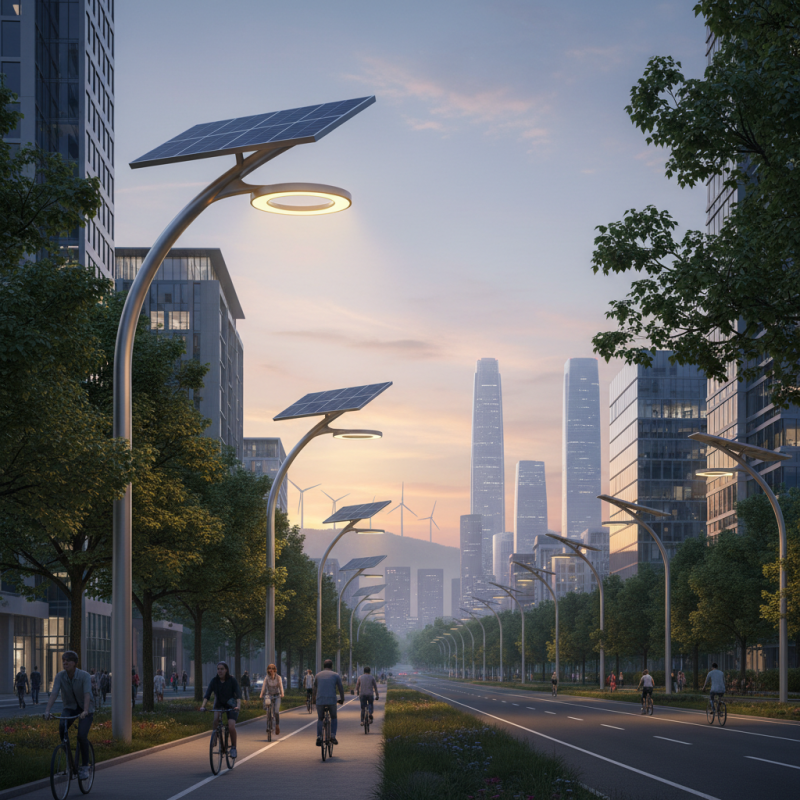
Benefits of Solar Powered Street Lights for Urban Environments
Solar powered street lights are transforming urban landscapes.
They rely on renewable energy, offering substantial benefits for cities.
Data from the U.S. Department of Energy indicates that solar street lights can reduce energy costs by up to 75%.
This is significant for municipalities with tight budgets.
These lights operate independently, reducing installation and maintenance expenses.
Urban areas can also face challenges with grid availability. By utilizing solar technology, cities can illuminate remote or underserved regions without extending the power grid.
Reports show that installing solar street lights can provide safety in previously dark neighborhoods, improving community well-being.
Despite these advantages, there are considerations to reflect on.
Solar panels can be less effective in areas with prolonged cloud cover. This challenges the reliability of solar lights in certain climates.
Additionally, the initial installation cost can be higher compared to traditional lights. However, the long-term savings often outweigh these initial investments.
Overall, solar street lights are a step towards sustainable urban development, but cities must carefully evaluate their specific needs and conditions.
Cost-Effectiveness of Solar Street Lighting Solutions
The rise of solar powered street lights offers significant cost savings for cities. Studies indicate that solar street lights can reduce energy costs by up to 60%. These lights require minimal maintenance due to their long-lasting solar panels and LED technology. Unlike traditional options, solar lights do not rely on grid power, leading to substantial savings on monthly electricity bills.
Installing solar powered street lights can also cut installation costs. They can be quickly deployed without trenching for electrical lines. A report by the U.S. Department of Energy states that cities can expect an average return on investment within five years. This means more budget flexibility for other essential services, like public safety and community programs.
Tip: Assess your current street lighting costs to explore potential savings. Consider collaborating with local energy consultants for an objective evaluation. Keep in mind that while solar street lights are effective, their performance can be influenced by seasonal weather changes. A thorough analysis will help you choose the right system for your city’s needs.
Why Choose Solar Powered Street Lights for Your City Needs? - Cost-Effectiveness of Solar Street Lighting Solutions
| City |
Annual Energy Savings ($) |
Installation Cost ($) |
Operational Lifespan (Years) |
Maintenance Cost (Annual) ($) |
CO2 Emissions Reduced per Year (kg) |
| City A |
$15,000 |
$120,000 |
20 |
$2,000 |
30,000 |
| City B |
$12,000 |
$100,000 |
15 |
$1,500 |
25,000 |
| City C |
$20,000 |
$150,000 |
25 |
$2,500 |
40,000 |
| City D |
$10,000 |
$80,000 |
10 |
$1,000 |
20,000 |
Environmental Impact of Solar Powered Street Lights
Solar powered street lights present a sustainable solution to urban lighting needs. Unlike traditional lights, they harness energy from the sun. This reduces reliance on fossil fuels. As cities strive for sustainability, these lights emerge as a practical choice. They promise cleaner air and less greenhouse gas emissions. Many cities face the challenge of rising energy costs. This technology can lead to long-term savings and reduced carbon footprints.
The environmental benefits extend beyond energy savings. These lights can help support local wildlife and reduce light pollution. They often have motion sensors, providing illumination only when needed. This not only conserves energy but also minimizes disruptive effects on nocturnal animals. However, there are considerations to keep in mind. Initial installation costs can be a barrier for some municipalities. Moreover, in areas with limited sunlight, performance may vary. Solar technology continues to improve, but uneven sunlight exposure remains a concern.
Ultimately, as cities explore greener alternatives, solar powered street lights could play a key role. They provide light while promoting environmental responsibility. This balance between progress and conservation is crucial for future urban planning. Investing in these systems reflects a commitment to healthier cities. It also challenges us to evaluate our current infrastructures and energy habits.
Environmental Impact of Solar Powered Street Lights
Solar powered street lights offer significant environmental benefits. The chart shows the estimated annual reductions in CO2 emissions, energy savings, waste reductions, and cost savings associated with implementing solar street lighting in urban areas.
Maintenance and Durability Compared to Traditional Lighting
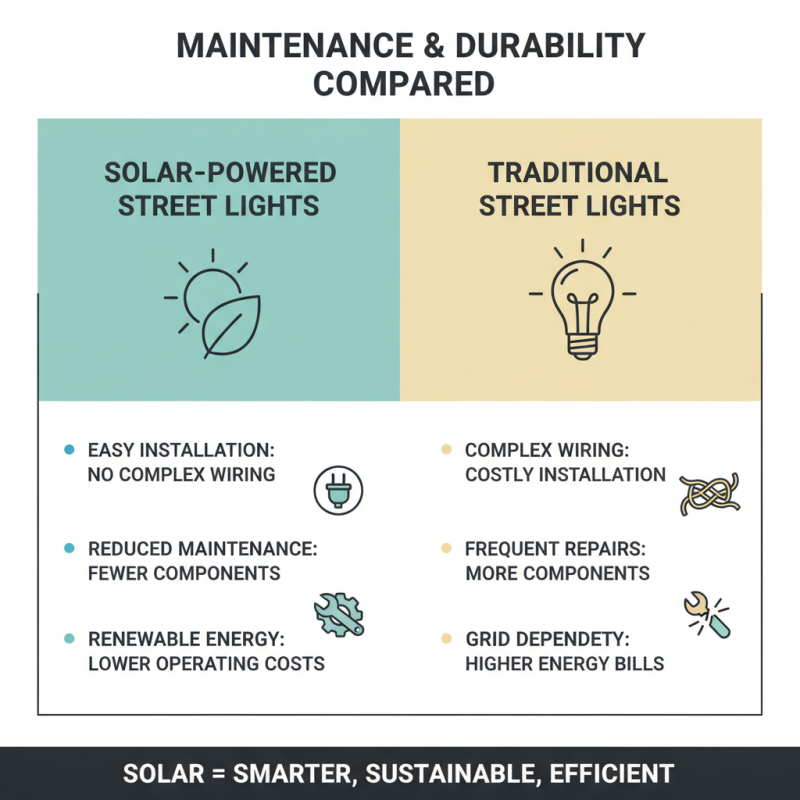
Solar powered street lights offer unique advantages in terms of maintenance and durability. Unlike traditional lighting, these fixtures rely on renewable energy sources, reducing the need for extensive electrical infrastructure. Solar lights are easy to install. They do not require complex wiring, which often leads to costly repairs. With fewer components to worry about, maintenance tasks are simplified, allowing city workers to focus on other essential duties.
Durability is another strong point. Solar street lights are designed to withstand harsh weather conditions. With their robust materials, they resist corrosion, rust, and other forms of wear. This resilience can lead to longer life spans compared to conventional lamps. However, some systems may have battery life limitations that can affect their overall performance. Regular check-ups on the battery status are crucial, as this can significantly impact efficiency.
Challenges in colder climates can also affect solar lighting. Snow accumulation may block sunlight from reaching the panels. Cities may need to have contingency plans in place for these situations. Addressing these potential issues includes monitoring and making adjustments as necessary. Empowering local teams with the right knowledge is essential for overcoming these hurdles effectively.
Innovations in Solar Technology for Street Lighting Applications
Solar technology has rapidly advanced, making solar-powered street lights a viable option for urban areas. New solar panels are now more efficient, converting sunlight into energy at higher rates. Innovations include lightweight materials that are easier to install. These improvements contribute to reduced costs and faster deployment in cities.
In addition, smart features are being integrated into modern solar street lights. Motion sensors allow lights to adjust brightness based on pedestrian activity. This conserves energy when streets are empty. Cities are also exploring solar lights with communication capabilities, enabling them to connect and share data. However, these systems can sometimes face connectivity challenges.
The integration of sustainable solar solutions is not without obstacles. Initial investment can be a barrier for some municipalities. Maintenance of the technology is another concern. Ensuring long-term performance requires planning and resources. Balancing initial costs with long-term benefits is essential for successful implementation. It is crucial for cities to explore these challenges and focus on finding practical solutions.