
How to Choose a Portable Rechargeable Flood Light in 2026?
Choosing a Portable Flood Light Rechargeable model in 2026 requires more than comparing brightness numbers. A powerful beam may look impressive in a product photograph, yet perform poorly beside a muddy driveway or inside a narrow workshop. Battery capacity, charging speed, beam control, weather resistance, stability, and heat management all affect practical value. The best choice depends on how, where, and how often the light will be used.
Lighting designer and educator James R. Benya offers a useful principle: “Good lighting serves the task, not merely the eye.” That idea should guide every specification in this article. A contractor may need a rugged light with a wide, even beam and replaceable power options. A camper may prefer a lighter body, several brightness levels, and USB-C charging. For emergency preparation, runtime matters more than impressive peak output.
Small details become important. Check whether the handle stays cool after thirty minutes. Test whether the base remains steady on wet ground. Look for battery indicators that remain readable in daylight. A claimed ten-hour runtime can change sharply at maximum brightness. This is where many buying guides oversimplify the decision.
I have also learned that “more lumens” is not always better. Excessive glare can hide nearby obstacles and strain the eyes. No model wins every test. This guide will examine realistic performance, not just laboratory claims, while recognizing that manufacturers measure brightness differently. The final recommendation should fit your hands, your worksite, and your tolerance for recharging.
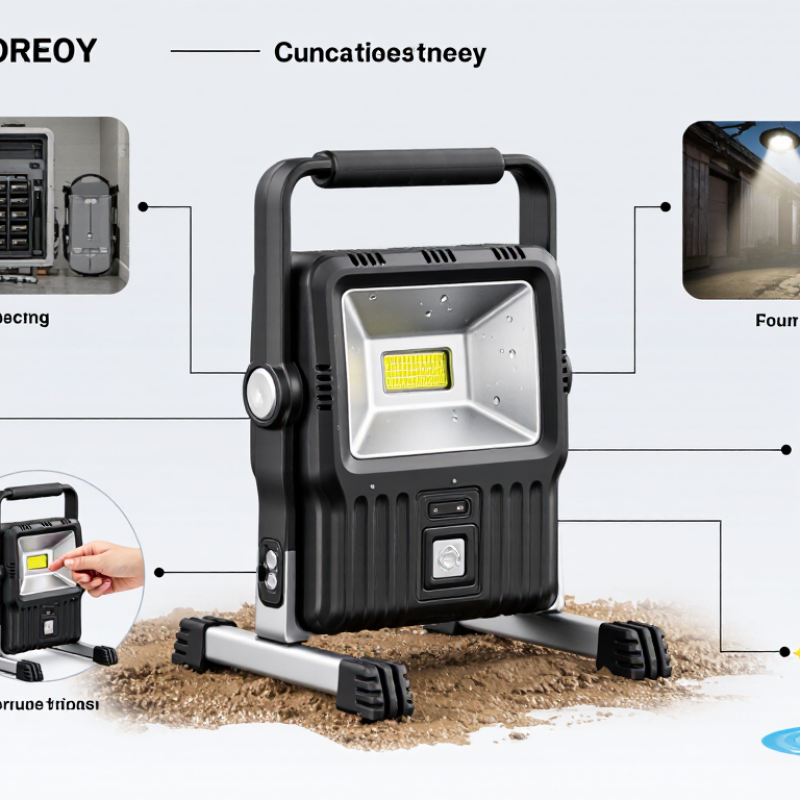
Define Your Portable Rechargeable Flood Light Requirements
Before choosing a portable rechargeable flood light, define where and how you will use it. A 1,000-lumen light may suit a small workshop, but it can feel weak across a large yard. Measure the working area and note the distance from the light to the task. For camping, emergency repairs, or outdoor maintenance, write down the needed brightness, beam spread, and operating time. Do not guess.
Runtime matters as much as brightness. Check the stated runtime at different power levels, not only the maximum setting. A light that runs for eight hours on low power may last less than two hours at full output. Consider how often you can recharge it and whether the charging port has a protective cover. A clear ingress-protection rating provides more useful information than vague claims about weather resistance. Test the control buttons with gloves if winter use is likely.
Think about placement. A folding handle, stable base, tripod thread, or magnetic mount can prevent awkward setup on a ladder or concrete floor. Keep the light cool enough to handle, but do not assume every model manages heat equally well. I once chose a bright light with a narrow beam, and it created harsh shadows around the repair area. It was powerful, but poorly matched to the job. That mistake changed my checklist: brightness, runtime, beam pattern, charging access, and physical stability all need separate attention.
How to Choose a Portable Rechargeable Flood Light in 2026? - Define Your Portable Rechargeable Flood Light Requirements
Use this specification guide to match brightness, runtime, battery capacity, durability, portability, and charging needs with your intended application.
| Requirement | Compact Emergency Use | Home, Garage, and DIY | Construction and Outdoor Work | Professional and Severe Conditions |
|---|---|---|---|---|
| Recommended Use Profile | Portable Power outages, vehicle emergencies, short inspections, and occasional household tasks. |
Balanced Routine repairs, workshops, camping, maintenance, and general property lighting. |
High Output Job sites, outdoor repairs, renovation work, roadside assistance, and wide-area illumination. |
Rugged Frequent professional use, wet environments, demanding transport, and extended work shifts. |
| Useful Brightness Range | 300–800 lumens | 800–1,500 lumens | 1,500–3,000 lumens | 3,000–6,000 lumens |
| Recommended Runtime at Medium Output | 6–12 hours | 5–10 hours | 4–8 hours | 3–8 hours |
| Typical Battery Capacity | 2,000–5,000 mAh Approximately 7–18 Wh |
4,000–10,000 mAh Approximately 15–37 Wh |
8,000–20,000 mAh Approximately 30–74 Wh |
12,000–30,000 mAh Approximately 44–111 Wh |
| Battery Type | Integrated rechargeable lithium-ion battery | Integrated lithium-ion battery with battery-level indicator | High-capacity lithium-ion battery with thermal and overcharge protection | Replaceable or serviceable lithium-ion battery system with protection circuitry |
| Charging Requirement | USB-C input; 5–15 W charging is generally sufficient | USB-C input; 15–30 W charging supports practical recharge times | USB-C Power Delivery or dedicated charger; 30–65 W preferred | Fast charging, removable battery charging, or dual charging options |
| Emergency Power Function | Optional USB output for small devices | Useful USB output for phones and compact electronics | Recommended USB-C output with power-bank capability | High-current USB-C output with clear battery status and safety controls |
| Beam Coverage | Focused or adjustable beam for close-range visibility | Wide beam with optional focused mode | Wide-area flood beam covering approximately 20–40 m² at close working distance | Adjustable flood and spot modes for both area lighting and longer reach |
| Color Temperature | 4,000–6,500 K | 4,000–5,700 K for a balance of comfort and detail visibility | 4,000–6,500 K for clear work-area illumination | 3,000–6,500 K, preferably with selectable color modes |
| Weather Resistance | At least IP54 for occasional outdoor use | IP54–IP65 for garages, camping, and light rain | IP65 or higher for dust and water-jet resistance | IP65–IP67 for frequent exposure to dust, rain, and temporary immersion risk |
| Impact Protection | Basic protective housing for household handling | Reinforced corners or rubberized exterior | Impact-resistant housing designed for regular job-site movement | Tested impact protection, protective lens, and reinforced mounting points |
| Target Weight | Under 0.6 kg | 0.6–1.5 kg | 1.0–3.0 kg | 1.5–4.5 kg, depending on battery and output |
| Positioning Features | Hand grip, small stand, or hanging hook | Adjustable stand and hanging hook | Swivel stand, magnetic base, tripod mount, or multiple hanging points | Stable adjustable frame, tripod compatibility, magnetic mounting, or clamp accessories |
| Control Options | One-button operation with low, medium, and high modes | Multiple brightness levels and memory function | Independent brightness control, work modes, and battery indicator | Selectable output modes, lockout function, thermal management, and remaining-runtime display |
| Key Buying Priority | Low weight, simple operation, and emergency readiness | Balanced brightness, runtime, charging convenience, and price | High output, wide coverage, robust construction, and fast recharge | Durability, replaceable power, weather resistance, safety controls, and long-term serviceability |
Note: Actual brightness and runtime vary with output mode, battery condition, ambient temperature, charging method, and product design. IP ratings describe water and dust resistance under controlled test conditions and do not guarantee performance in every environment.
Related Posts
-
2026 Best Rechargeable Portable Flood Light Supplier
-
Why Choose a Cob Work Light for Your Projects?
-
Top 2026 Cob Work Light Features That Buyers Need to Know?
-
Top 10 Cob Work Lights for Global Buyers to Consider?
-
How to Choose the Best Emergency Work Light for Your Needs
-
2026 Best Emergency Work Light Options for Every Situation